Your trees are more than just part of your property’s landscape. They provide shade on hot summer days, add value to your home and create a welcoming environment for your family. But like any living thing, your trees face ongoing threats from various pests and diseases that can compromise their health and even pose safety risks to your property.
If you live in Penrith, Hawkesbury or the Blue Mountains, understanding these threats and knowing when to call in a qualified arborist, can make all the difference between a healthy, thriving tree and one that becomes a costly problem down the track.
Why Tree Health Matters in Our Region
You might not realise it, but our region is pretty special when it comes to trees. The Blue Mountains forms part of the World Heritage-listed Greater Blue Mountains Area, recognised for its outstanding biodiversity and remarkable diversity of eucalypt species. That means the trees in your backyard are part of something much bigger.
Our mild climate and diverse tree populations also create perfect conditions for a range of pests and diseases to thrive, which is why it’s so important to have a professional – who knows what they’re looking for – assess your trees regularly.
Common Pests Affecting Your Trees
Psyllids and Sap-Sucking Insects
Have you noticed small insects on your fig trees? You might be dealing with psyllids. Fig Psyllids are sap-sucking pests that live their entire life cycle on host trees, with nymphs feeding on the leaves as they develop into winged adults.
While a healthy tree can usually handle a few of these pests, psyllid numbers increase during dry, hot weather, and over time, trees can suffer canopy loss and death.
What might start as minor leaf damage can snowball into a serious problem during our hot, dry summers. A qualified arborist can assess the infestation and recommend whether your tree needs better water and nutrient support or if targeted treatment is required.
Borers: The Hidden Threat
Borers are sneaky. These insects create tunnels inside a tree’s bark and wood, essentially eating away at your tree from the inside out. Early signs can be subtle. You might spot small holes in the bark, sawdust-like material around the base of the tree, or leaves changing colour well before autumn.
Unfortunately, by the time you see external signs, significant internal damage may already have been done. A qualified arborist can assess whether your tree can be saved or if it has become a structural or safety risk.
Introduced Pests
Not all tree pests are native. Some of the most damaging ones have come from overseas. The Sycamore Lace Bug, a native North American pest of plane trees, was most likely introduced into NSW around 2006. Symptoms include small yellow spots on the upper surface of leaves, which expand into bronze patches, along with black specks on leaf undersides and premature leaf drop.Repeated infestations weaken trees by reducing photosynthesis and can also introduce fungal diseases.
The Monterey Pine Aphid, also from to North America, was first recorded in Australia in 1998 and is now present in all areas where pine trees are grown. Look for yellowing of older pine needles in the upper crown, followed by needle drop from autumn into winter. Long-term infestations can reduce tree growth by up to 30% and cost Australia’s forestry industry millions annually.
These examples show why early detection and reporting unusual activity is so important for protecting not just your trees, but your neighbours’ trees too.
Key Diseases to Watch For
Fungal Diseases
Fungal diseases can be devastating, especially in the Blue Mountains’ humid conditions where they thrive. One common example is Plane Tree Anthracnose, which affects Platanus species worldwide. It causes leaf and twig damage in early and mid-season and can significantly impact tree health if left untreated.
Different fungal diseases affect different tree species, and symptoms can be easy to miss until the damage is well underwayA professional arborist can identify the specific fungus affecting your tree and recommend the right treatment.
Myrtle Rust: A Serious Concern
If you have bottlebrushes, paperbarks, lilly pillies or eucalypts, you need to know about myrtle rust. This disease was first detected in New South Wales in 2010 – after slipping through Australia’s biosecurity protocols – this aggressive fungal pathogen is believed to have originated in South America.
Its impact has been devastating.Since its arrival, at least five native plants have been pushed to the brink of extinction. Post-bushfire surveys following the 2019-20 Black Summer fires revealed widespread infection, with myrtle rust symptoms found in all survey sites in fire-affected areas of south-east Queensland and NSW..
Watch for bright yellow or purple spots on young leaves, shoot tips and fruit. If you spot anything suspicious, report it immediately and get a qualified arborist to assess it.
Eucalyptus Leaf Diseases
Teratosphaeria leaf diseases is one of the most common issues affecting eucalyptus trees. It, causes leaf spotting, blight and eventually death. Since eucalypts are everywhere in our area, early detection gives you the best chance of saving your tree.
Root Diseases
Root diseases are frustrating because you often don’t realise there’s a problem until your tree is already in serious trouble. One of the most damaging root diseases is Phytophthora cinnamomi, a microscopic water mould that spreads through soil and water. Often unknowingly carried on shoes, tent pegs, gardening tools and bike or car tyres. To help prevent its spread, always clean your boots and tools before moving between garden areas, properties or the bush.
Your Legal Responsibilities
Under the Biosecurity Act 2015 and Biosecurity Regulation 2017, you’re legally required to report the presence, or suspected presence, of any pest, disease or condition that presents a biosecurity risk in NSW. If you suspect an emergency serious disease it must be reported immediately.
To report, contact the NSW Department of Primary Industries or call the NSW Biodiversity hotline – 1800 680244. Early reporting helps protect your trees, your community and our environment.
Before removing or heavily pruning any tree, check with your local council about regulations. Some trees are protected, and you might need approval before any work begins.
Protecting Your Trees
Regular Monitoring
Check your trees at least seasonally for signs of stress or disease. Look out for changes in leaf colour or density, unusual spots or discolouration, signs of insects, changes to bark appearance, fungal growth, premature branch dieback, or excessive sap flow.
Maintaining Tree Health
Keep your trees healthy by watering during dry spells, mulching to regulate soil moisture, avoiding soil compaction around roots, protecting trees during construction work, and removing dead wood and debris.
When to Call a Professional
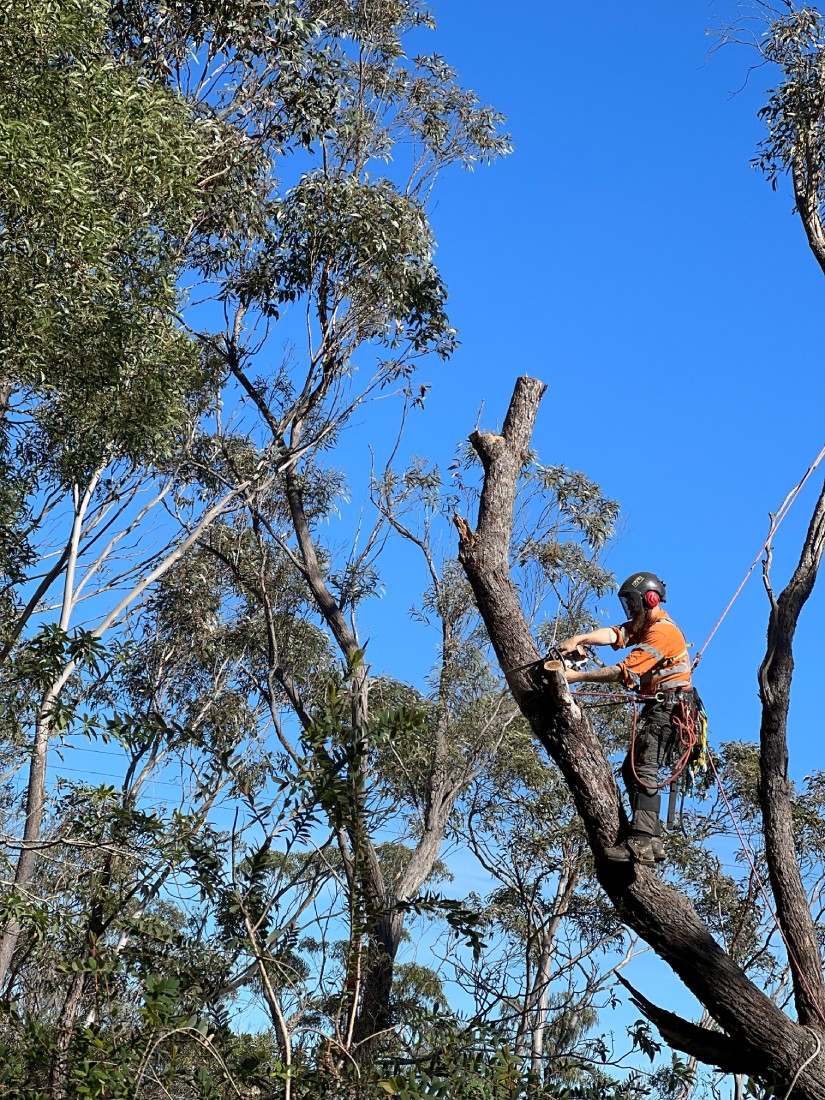
Early detection and professional assessment keep your trees healthy and safe. Whether you’re caring for one tree or managing multiple specimens, working with a qualified arborist means your trees get expert care.
Sometimes removal is the most sensible option. Especially when diseases have progressed beyond treatment, the tree’s structural integrity is compromised, it poses a safety risk, or the pest could spread to other trees. For information about hiring qualified contractors, visit SafeWork NSW.
The Value of Professional Expertise
Qualified arborists bring specialised knowledge of local tree species, common regional pests and diseases, current biosecurity threats, effective treatment methods and regulatory requirements. For those of us in Penrith, Hawkesbury, and the Blue Mountains, where our region’s ecological significance is profound, professional arboricultural services aren’t just nice to have, they’re essential.
Your trees deserve the best care possible, and that starts with recognising when something’s not quite right and getting expert help before a small problem becomes a big one.