Specialised relocation machinery
Purpose-built equipment for excavating, lifting and transporting trees of all sizes, from residential specimens to large palms.

Tree relocation preserves mature trees that would otherwise be lost to development, construction or site changes. We handle the full process, from assessment and root preparation through to transport, replanting and aftercare, for councils, developers and private clients across Sydney.
Transplanting a mature tree is not the same as planting a new one. It requires specialised equipment, careful root preparation and arborists who understand how to keep the tree alive through excavation, transport and re-establishment. Here is what we bring to every relocation.
Purpose-built equipment for excavating, lifting and transporting trees of all sizes, from residential specimens to large palms.

Rootball wrapping, soil retention and careful handling at every stage to give transplanted trees the best chance of survival.

Our arborists assess tree health, species suitability and site conditions before any relocation is approved.

Post-transplant monitoring, watering programs and health checks to support establishment in the new location.

$50 million public liability insurance on every project. No exceptions.

Professional documentation, arborist reports and project records for council applications and development approvals.
Tree relocation is the process of excavating a tree from its current position, transporting it and replanting it in a new location while preserving the root system, trunk and canopy intact. It is used to preserve valuable trees that would otherwise be removed due to construction, development, infrastructure upgrades or site redesign. Successful relocation depends on species assessment, root preparation, appropriate equipment and structured aftercare.
Dixons Trees has been relocating trees for councils, developers and private clients across Sydney, the Blue Mountains, the Central Coast and the South Coast since 2009. Our projects range from single residential specimens to large-scale council and commercial relocations involving multiple trees, cranes and coordinated site logistics. For detailed information on our transplanting capabilities, equipment and completed projects, visit Dixons Tree Transplanting.
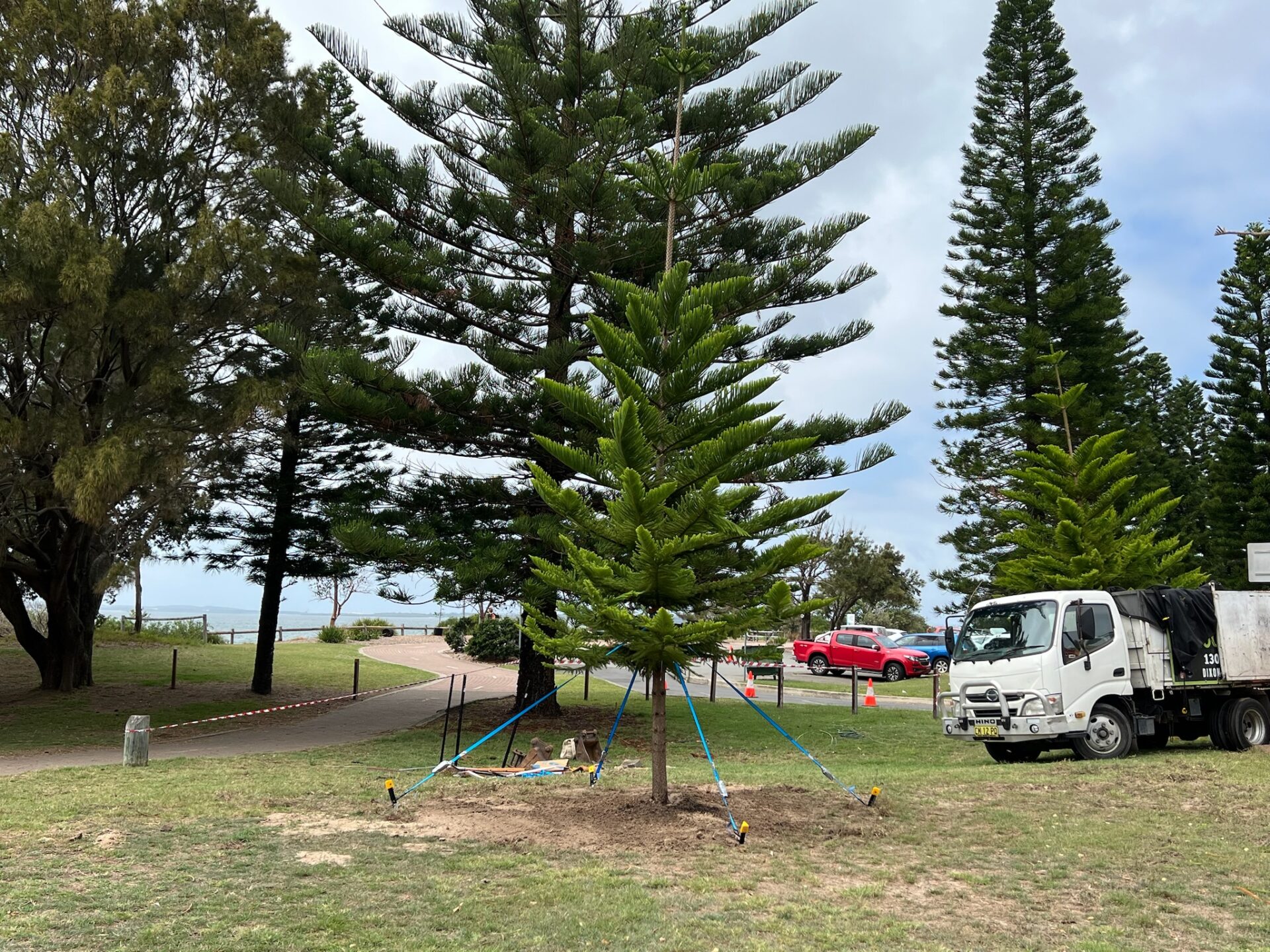
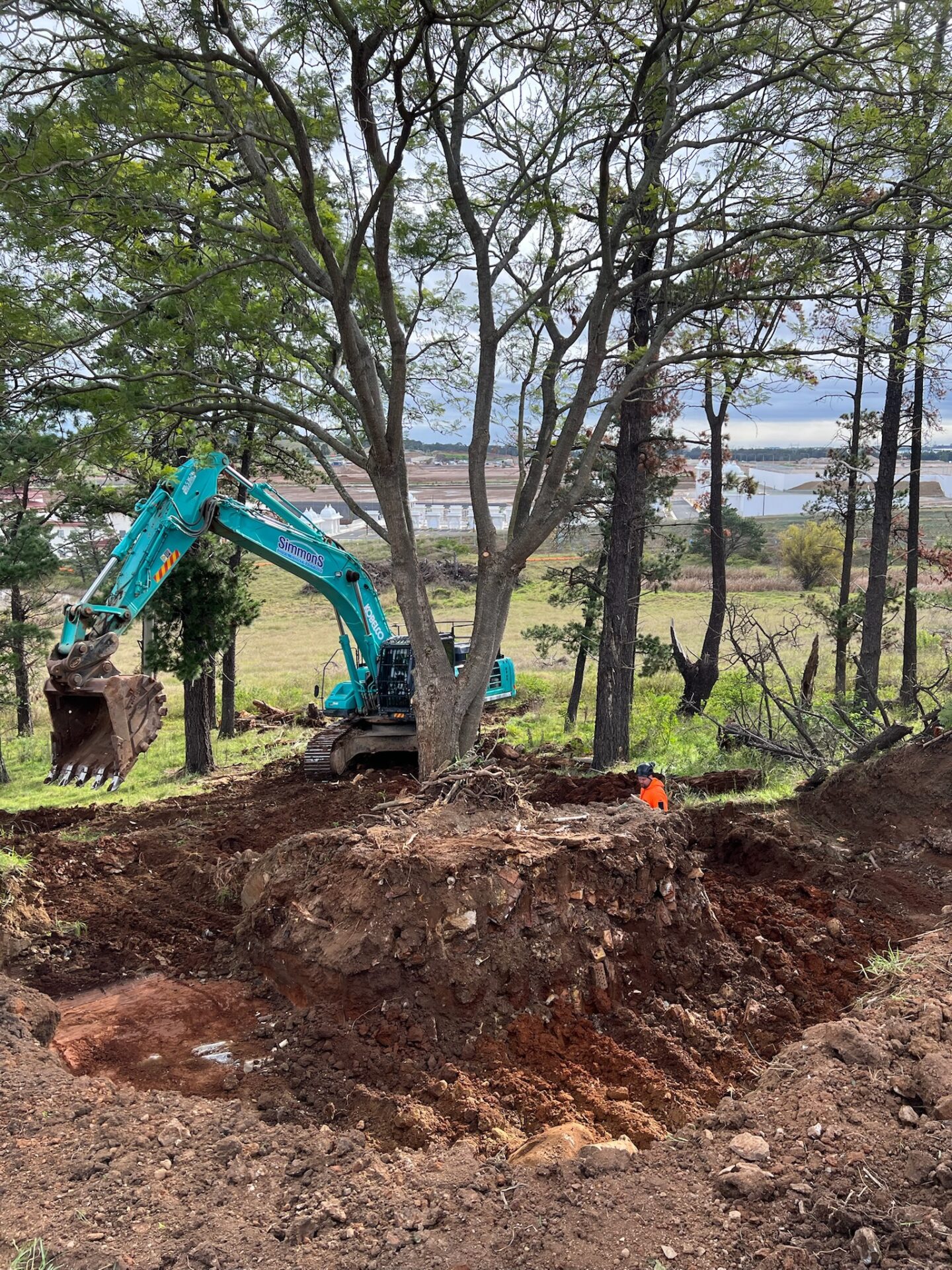
Relocation is not always viable, but when it is, it often delivers better outcomes than removal for the tree, the project and the approval process.
Trees in the path of new buildings, driveways or services do not always need to come down. Relocating them within the site or to an offsite holding nursery lets your project proceed while preserving mature landscape assets. Many councils look favourably on relocation as part of a DA submission.
Road upgrades, park redevelopments and public works often affect established trees. We work with councils and government agencies to relocate trees that would otherwise be lost, maintaining community green assets and meeting environmental commitments.
Some trees have heritage listing, cultural significance or sentimental value that makes removal unacceptable. Relocation preserves the tree and its history. We have relocated species including Wollemi Pines, Japanese Maples and mature native specimens where preservation was a priority.
A mature tree in the wrong spot can block a renovation, pool installation or new driveway. Rather than removing years of growth, relocation lets you keep the tree and redesign the space around it.
Palms are among the most commonly relocated species because they tolerate transplanting well and provide immediate visual impact at the new site. We relocate Cocos palms, Phoenix palms, Bangalow palms, Fan palms and other species for residential, commercial and council clients.
Council approval conditions often require tree preservation or offset planting. Relocation can satisfy these requirements more effectively than removal and replacement, potentially reducing approval timeframes and conditions.
Trees planted by family members, rare species or mature specimens with significant landscape value are worth saving. If the tree is healthy and the species is suitable for transplanting, relocation is often a practical alternative to removal.
Most of the tree relocation work we do is for councils and developers where the trees are large, the timelines are tight and the documentation needs to be right. We operate specialised relocation machinery, lifting platforms and cranes designed for moving trees that standard equipment cannot handle.
Whether you need a single tree moved within your property or a coordinated relocation of multiple trees across a development site, we assess each tree’s viability, plan the logistics and manage the full process. If a tree is not suitable for transplanting, we will tell you upfront rather than attempt a relocation that is unlikely to succeed.
For full details on our transplanting process, equipment and project portfolio, visit Dixons Tree Transplanting
Qualified arborists for health assessment and species suitability
Specialised tree relocation machinery and lifting platforms
Rootball protection and soil retention equipment
Crane-assisted relocation for large specimens
Post-transplant aftercare and monitoring programs
Independent arborist reports for council and DA applications
$50 million public liability insurance
Coordination with builders, developers and project managers
Tell us about the tree and the situation: species, approximate size, why it needs moving and where you want it relocated. Photos help us assess viability early. We will arrange a site visit, usually within a few days.
Our arborists inspect the tree’s health, root structure and species suitability for relocation. We assess the current site for access and logistics, and the destination site for soil conditions and space. You get a straight answer on whether relocation is viable.
A comprehensive proposal covering the relocation method, equipment requirements, site preparation, timeline, aftercare program and cost. For council or development projects, we include documentation for DA submissions.
Depending on the tree and project, preparation may include root pruning and conditioning before the move. On relocation day, our crew excavates, wraps and lifts the tree using specialised equipment, transports it and replants it at the new location with proper soil preparation and support.
Post-transplant care supports the tree through the critical establishment period. This includes watering programs, health checks and ongoing monitoring to give the tree the best chance of thriving in its new position.
Dixons Trees has been NSW’s trusted tree services provider since 2009. Our qualified arborists handle everything from complex removals in tight spaces to routine pruning and maintenance.
We do commercial land clearing, backyard tree work and everything in between. All of it completed to Australian Standards, fully insured and council-compliant.
Councils, developers, builders and commercial property managers across the Blue Mountains, Western Sydney and the Central Coast.














Tell us about the tree, the project and the timeline, and we will arrange a site assessment. You will receive a detailed proposal covering viability, method, aftercare and cost, with no obligation to proceed.
For large-scale or time-sensitive relocation projects, call us directly to discuss your requirements.
17+ years experience · 300+ Google Reviews · Councils, developers and private clients across Sydney
It varies significantly based on the tree’s species, size, rootball dimensions, transport distance, access at both sites and the level of aftercare required. A small tree moved within a property costs considerably less than a large specimen relocated across Sydney with crane assistance. We provide a detailed proposal after a site assessment so you understand the full scope and cost before committing. Contact us for a free assessment.
Not all trees are suitable for relocation. Success depends on species, health, age, root structure and the conditions at the destination site. Some species tolerate transplanting well, particularly palms, while others are more sensitive. Our arborists assess each tree individually and give you an honest answer on viability before any work begins. We do not relocate trees in pots or containers.
The terms are used interchangeably. Both refer to the process of excavating a tree from one location and replanting it in another while keeping the root system, trunk and canopy intact. The goal is the same: preserving the tree rather than removing it.
It depends on the species, size and conditions. Most relocated trees need 12 to 24 months of structured aftercare, including regular watering, monitoring and health checks, before they are fully established in their new position. Palms tend to establish faster than most hardwood species.
In most cases, yes. If the tree meets size thresholds for council regulation, relocation typically requires the same approvals as removal. However, councils often view relocation more favourably than removal in DA assessments. We provide all necessary arborist reports and documentation to support your application.
We relocate trees across Sydney, the Blue Mountains, Western Sydney, the Hawkesbury, the Central Coast and the South Coast. Our service area for tree relocation is broader than our general tree services because we operate specialised equipment that travels to wherever the project requires.
Yes. We work with developers, builders and project managers to coordinate tree relocation within broader construction timelines. We can stage relocations across development phases, hold trees in temporary nursery locations and coordinate with other trades on site. For more detail on our commercial and development transplanting services, visit Dixons Tree Transplanting.
Professional tree services across the Blue Mountains, Western Sydney and the Hawkesbury.