
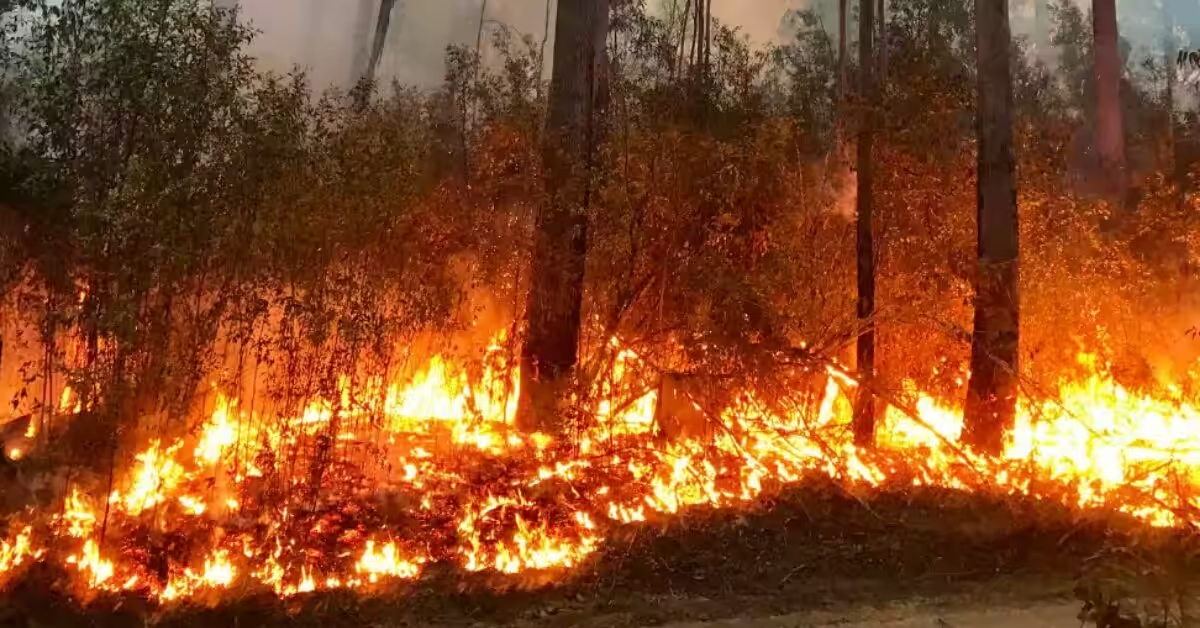
Summer in the Blue Mountains brings bushfire season. If your property backs onto bushland, scrub, or grassland, now’s the time to prepare.
The good news: proper preparation makes a significant difference. A well-maintained property with managed vegetation is far more likely to survive a bushfire than one that’s been neglected. Here’s what you need to know.
Understanding Your Bushfire Risk
The first step is knowing whether your property sits on bushfire-prone land. In the Blue Mountains and Western Sydney, many properties fall into this category. You can check your specific property using the NSW Rural Fire Service’s online mapping tool.
Living near bushland doesn’t just mean eucalypt forests. The NSW RFS defines bushland broadly: scrub, grassland, crops, woodland, and farmland all count. If any of these surround your property, you’re at risk.
Bushfires generate extreme heat, produce ember showers that can travel kilometres ahead of the main fire front, and create their own weather conditions. Your property needs to be prepared for all three threats.
Creating Defensible Space Around Your Home
Asset Protection Zones (APZs) are the cornerstone of bushfire preparation. An APZ is a fuel-reduced buffer between bushland and your buildings. Think of it as creating space where firefighters can safely defend your property and where radiant heat and ember attack are reduced.
The width of your APZ depends on slope, vegetation type, and your property’s specific risk factors. However, the NSW RFS Standards for Asset Protection Zones provide clear guidance: minimise fuel loads and prevent fire from travelling through vegetation to your home.
This doesn’t mean removing every tree. Strategic management is key. Separate tree canopies by 2-5 metres, pruning branches up to 2 metres above ground level, and ensure tree canopies don’t overhang within 2-5 metres of your dwelling.
Tree Management for Bushfire Safety
Professional tree services play a critical role in bushfire preparation. Here’s what needs attention:
Remove dangerous trees: Dead, dying, or structurally compromised trees near your home are hazards. They’re more likely to ignite, drop burning branches, or fall during high winds. Professional tree removal services can safely eliminate these risks.
Prune strategically: Healthy trees can remain, but they need proper maintenance. Remove lower branches to prevent ground fires from climbing into the canopy. Thin dense canopies to prevent fire spreading from tree to tree.
Clear around structures: Trees with loose, fibrous, or stringy bark (like many eucalypts) are particularly dangerous. These bark types easily catch embers. If these trees are close to your home, they need removing or careful management.
Vegetation Clearing: Know the Rules
Before you start cutting or clearing, understand the regulations. NSW has specific laws about vegetation management, even for bushfire preparation.
If you’re in a designated 10/50 Vegetation Clearing Entitlement Area, you can clear certain vegetation within 10 metres of homes and underlying vegetation (but not trees) within 50 metres. However, conditions apply, so check the rules before you begin.
For more extensive clearing, you might need a Bush Fire Hazard Reduction Certificate from the NSW RFS. This ensures your hazard reduction work complies with environmental regulations and bush fire risk management plans.
Don’t clear first and ask questions later. Check your obligations, obtain necessary approvals, and use qualified professionals who understand both bushfire protection requirements and environmental regulations.
Ground-Level Fuel Management
Trees aren’t the only concern. Ground-level fuels are just as important:
Reduce leaf litter: Accumulated leaves, bark, and twigs create fast-burning fuel. Regular raking and removal around buildings is essential. Pay particular attention to areas under trees and near structures.
Manage grass: Keep grass short and green where possible. Long, dry grass burns intensely. Mow regularly throughout the fire season, particularly in your inner protection zone.
Clear debris: Remove fallen branches, wood piles, and dead vegetation. Store firewood well away from buildings (at least 10 metres).
Mind the mulch: Heavy mulch layers can harbour embers and burn slowly for hours. Near your home, use minimal mulch or choose non-combustible alternatives like gravel.
Gutters, Roofs, and Building Maintenance
Gutters filled with leaves are ember traps. When embers land in dry leaves, they smoulder and can eventually ignite your roof. Clean gutters thoroughly before fire season and consider installing gutter guards.
Check your roof for gaps where embers might enter. Ensure roof tiles are secure, replace broken tiles, and seal gaps around vents and chimneys. Trim branches that overhang your roof.
The Timing Question
When should you prepare? Now. The best time to prepare for bushfire season is before it arrives.
In the Blue Mountains, bushfire danger typically peaks from late spring through summer. Your preparation work should happen in autumn and winter. Trees are easier to prune when dormant, contractors are more available, and you’ll have time to obtain necessary approvals.
Don’t wait for a total fire ban or catastrophic fire danger rating. By then, it’s too late for major work.
Professional Help Matters
Bushfire preparation isn’t a DIY project. Proper tree work requires qualified arborists with the right equipment, insurance, and knowledge. Professional arborists understand which trees pose risks, how to prune for bushfire safety without harming tree health, and how to work safely near powerlines.
The cost of professional preparation is modest compared to the value it protects. Your property, your family’s safety, and your peace of mind are worth the investment.
Start This Week
Bushfire preparation can feel overwhelming, but break it into manageable steps. Walk around your property this week and identify what needs attention. Make a list of trees requiring pruning or removal, areas needing fuel reduction, and maintenance tasks like gutter cleaning.
Get quotes from qualified arborists for necessary tree work. Book hazard reduction work for autumn or winter. Clean your gutters. Clear debris from around buildings.
Summer bushfire season will arrive whether you’re ready or not. The question is: will your property be prepared?