Look, we all love our trees. They give us shade on hot summer days, make the yard look great, and keep the property cool. But sometimes a tree becomes more of a worry than a benefit. Maybe it’s leaning toward your house, dropping dead branches, or just looks unhealthy. When that happens, you need to know whether it’s time to call in the professionals.
When You Should Consider Tree Removal
Not every dodgy-looking tree needs to come down. But there are clear signs that removal is the safest option.
Dead or Dying Trees
A dead tree is basically an accident waiting to happen. Those branches can drop without warning, especially when the wind picks up or during a storm. If your tree has no leaves when everything else is green, the bark’s peeling off, or you’re seeing mushrooms growing at the base, it’s likely dead or dying.
The tricky bit? Some trees look dead in winter but are just dormant. A professional arborist can tell you for sure whether your tree’s actually gone or just having a rest.
Leaning or Damaged Trees
See that tree leaning more than it used to? That’s often a sign the roots are giving up or there’s damage you can’t see. Deep cracks in the trunk aren’t great either. That means the tree’s weak on the inside and could snap when you least expect it.
Storm damage is another red flag. If big branches are hanging loose or the tree took a battering in the last storm, get someone out to have a look before the next weather event hits.
Pest Problems and Disease
Trees get sick just like we do, and sometimes there’s no fixing it. If you’re seeing holes in the bark with sawdust around them, wilting branches, or weird discolouration on the trunk, pests or disease might be the culprit. Once it’s advanced enough, the tree becomes a risk to your other plants and needs to go.
Making Room for Building Work
Sometimes you need to remove a tree for a renovation or new build. Fair enough. But before you grab the chainsaw, check if tree transplanting might work instead. You’d be surprised how many trees can be moved rather than removed, especially if council’s attached to keeping it around.
What You Need to Know About Council Rules
Here’s the bit that catches people out: you can’t just remove any tree you like in NSW. The council has rules, and breaking them gets expensive fast.
When You Need Council Approval
Most councils in NSW require permits for tree removal through Tree Preservation Orders and Local Environment Plans. According to Service NSW, you’ll generally need approval if your tree is:
- 5 metres or taller
- Has a trunk diameter of 300mm or more
- Has a crown spread of 4 metres or more
Heritage trees and certain protected species need approval regardless of size.
When You Don’t Need a Permit
Good news: some situations let you skip the council paperwork. Emergency cases where the tree’s an immediate danger usually qualify. You’ll need to notify the council afterwards, but you can act fast when safety’s on the line.
If you’re in a bushfire-prone area, the 10/50 rule lets you clear trees within 10 metres and smaller vegetation within 50 metres of your house without asking permission. Dead trees, fallen trees, and invasive pest species generally don’t need permits either.
The Cost of Getting It Wrong
Don’t risk it. According to legal experts, illegal tree removal in NSW can cost you up to $1.1 million in fines for serious breaches. Even smaller penalties hurt. Plus, the council can make you replant and maintain replacement trees for years.
What Happens During Professional Tree Removal
Once you’ve sorted the approvals, here’s what to expect when the crew shows up.
The Assessment
Professional arborists start by checking out the tree properly. They’ll look at its health, size, and what’s around it (your house, power lines, the neighbour’s fence). This tells them the safest way to get it down without damaging anything.
Getting Council Approval Sorted
If you need a permit, a good tree service will help with the paperwork. They’ll prepare the arborist reports, submit everything to council, and deal with any site inspections. The approval usually takes a few weeks, though emergencies get processed faster.
On the Day
Before they start cutting, the crew will set up safety zones, move any outdoor furniture out of the way, and protect your gardens and structures. They’ll also give your neighbours a heads-up if the work’s going to be noisy or if equipment needs to sit near the boundary.
How They Remove the Tree
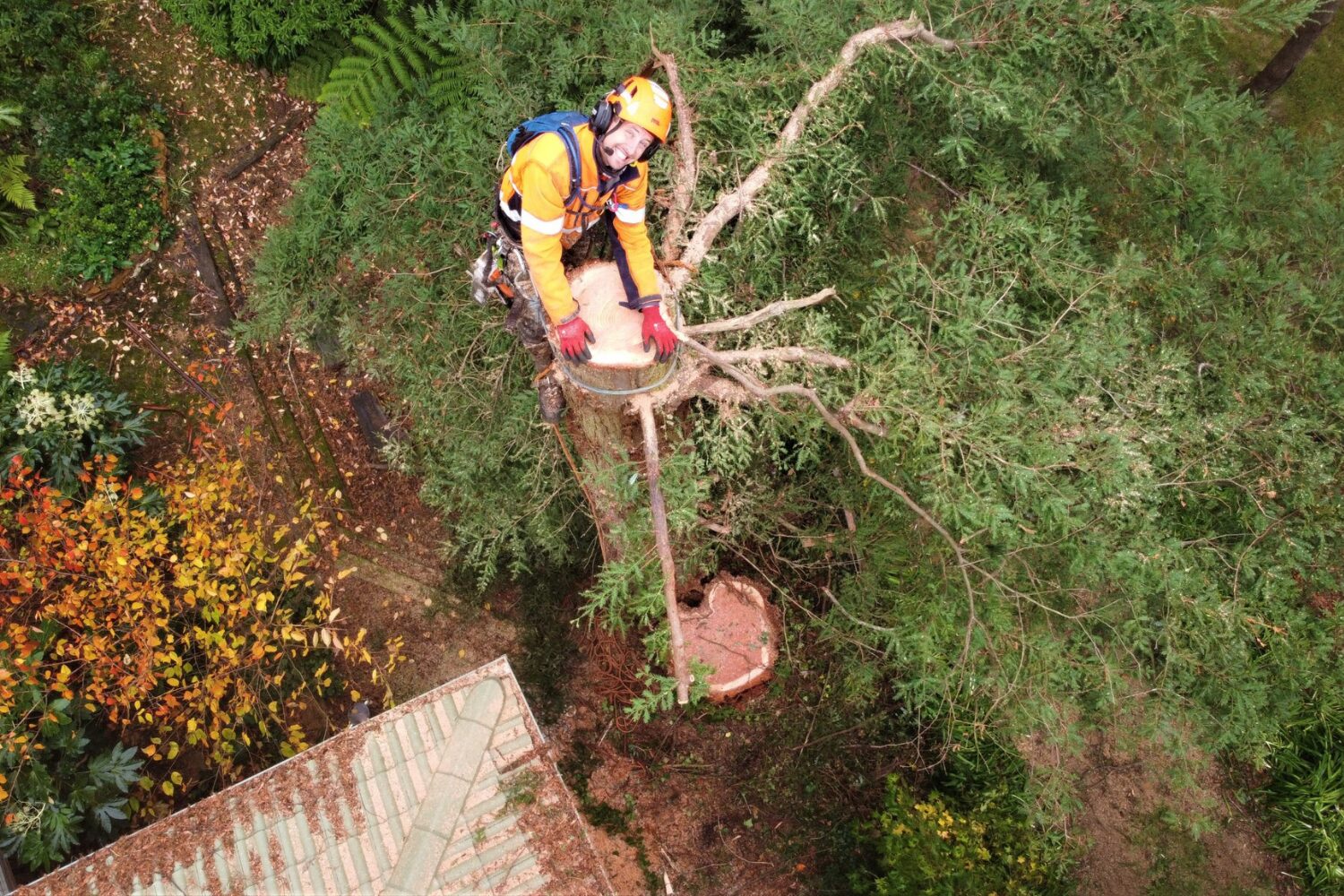
The method depends on the tree and what’s around it. If there’s plenty of room, they might fell it in one go. That’s the quickest way. But in tight spaces or near buildings, they’ll climb up and bring it down piece by piece, using ropes to lower each section safely. Big or tricky trees sometimes need a crane.
Stump Grinding and Cleanup
After the tree’s down, you’re left with a stump. Most services include stump grinding, which grinds it below ground level so you can use that space properly. The crew will then clean up all the debris and often offer you the wood chips as garden mulch.
Choosing Someone Reliable
Tree removal’s dangerous work. You want someone who knows what they’re doing and has proper insurance. Look for qualified arborists with Level 5 certifications and at least $20 million public liability insurance. Experience matters too. Ask about their track record with similar jobs and check they understand local council requirements.
Get multiple quotes, but don’t just go for the cheapest. The lowest price often means dodgy insurance, unqualified operators, or surprise costs later.
Tree removal isn’t something to rush into or tackle yourself. The risks are too high and the regulations too strict. But when a tree genuinely needs to come down, working with qualified professionals who understand the process and local requirements means it gets done safely, legally, and without hassles.
If you’re dealing with a problem tree, get a proper assessment before making any decisions. Professional arborists can tell you whether removal’s truly necessary or if there’s a better option. Either way, you’ll have the information you need to protect your property and stay on the right side of council regulations.
For professional tree removal services in the Blue Mountains, contact Dixons Trees. Our qualified arborists provide safe, council-compliant tree removal with comprehensive insurance and proven expertise. Request a free assessment today.